
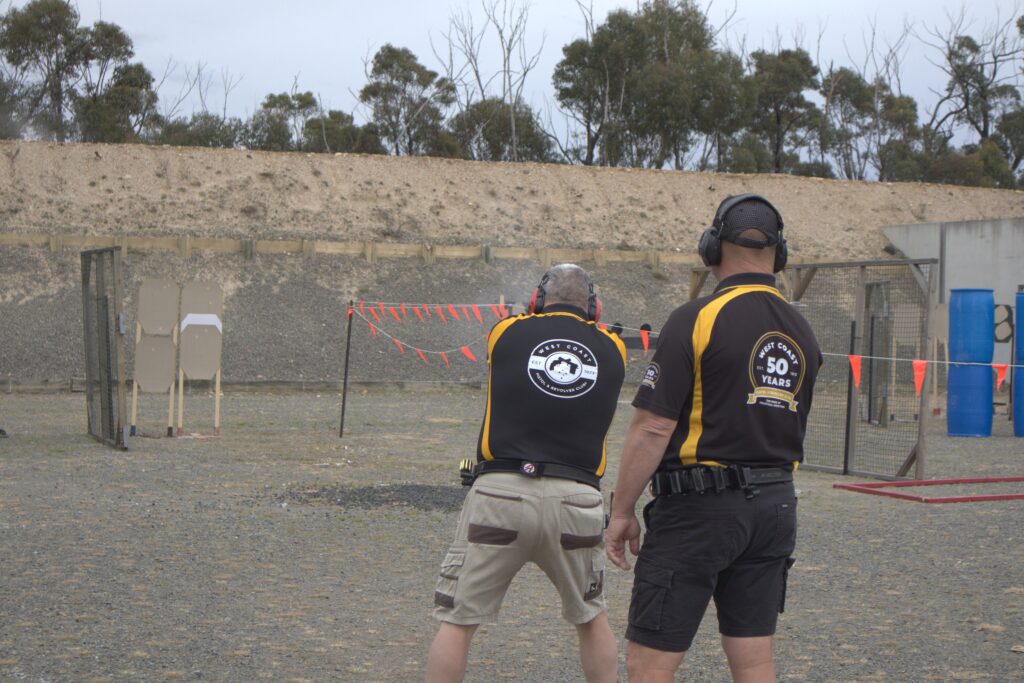
Accuracy, speed and movement, all against the clock. That’s Practical Shooting in a nutshell, and from 2 to 4 October 2026, more than 60 competitors from Western Australia, South Australia, the Northern Territory and New South Wales put all three to the test across 10 stages at the 2026 SSAA Practical Shooting Handgun National Championships, hosted by the SSAA NSW Hill Top Shooting Complex.
A discipline on the rise
For SSAA NSW, hosting the nationals was about more than a weekend of competition. It was a statement of intent to stand up Practical Shooting in this state and give members a dynamic discipline to enjoy. Leading that push is SSAA NSW Discipline Chair for Practical Shooting (Handgun), Scott Allman, who is championing the growth of the discipline across the state.
Practical Pistol combines accuracy, movement and time. Competitors work through a series of stages, each with a clearly defined course of fire, shooting paper and steel targets at distances of up to 50m. Scores reward both accuracy and speed, so the best shooters are those who balance precision with efficient movement, all under strict safety and range procedures. Shooters are graded over time from Master down to D Grade, so everyone competes against others of similar shooting ability.
Competitors are also grouped into divisions according to their firearm. Open showcases precision-engineered competition pistols, often featuring optical sights and compensators, designed for the speed and accuracy demanded at the highest levels of the sport. Standard combines competition-ready pistols with traditional iron sights, balancing sporting performance within clearly defined equipment rules. Production puts factory-specification handguns with traditional iron sights centre stage, placing the spotlight firmly on the shooter’s skill, timing and control. Production Optics builds on that same foundation with a compact red-dot sight in place of traditional iron sights, adding another dimension to the contest. The revolver classes deliver their own formidable challenge, demanding exceptional precision, seamless technique and expertly timed reloads.
Laying the groundwork
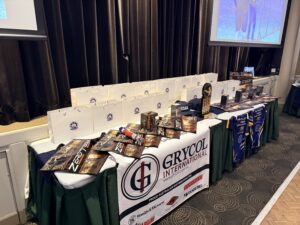
An event of this scale doesn’t come together in a matter of weeks. Planning began months out, and by the time the first competitor arrived, almost every detail had long since been settled. It was a genuine team effort between SSAA NSW and the discipline’s national leadership, backed throughout by SSAA NSW President Jai Rowell and CEO Pete Szaak. The championships were also made possible by the generous support of sponsors TSA Outdoors, Grycol International and Canik (distributed by Australian Sporting Agencies).
At the heart of the event was Paul Fitzgerald, SSAA National Senior Vice-President, SSAA WA State President and SSAA National Discipline Chairman (Practical Shooting). Paul meticulously prepared the stage design and instruction sheets for all 10 courses of fire, supported by a team of volunteers, and coordinated the range officer team and squad matrix, serving as the national point of contact for the championships.
Turning those drawings into working courses fell to the SSAA NSW Hill Top Shooting Complex Team, led by SSAA NSW Range Operations Manager Boutros Zouki, working alongside Team WA and volunteers from NSW, most of them range officers. For Boutros, a newcomer to the discipline, it was an eye-opening experience. “While many competitors see only the finished product on match day, I quickly came to appreciate the extraordinary complexity involved in planning and delivering a championship of this scale,” he said. The range officers took to the stages themselves on the Friday in a dedicated range officer match, giving every course a final shakedown.
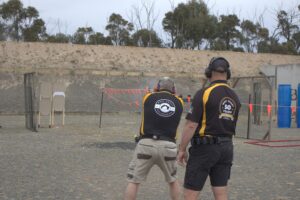
Stages with a purpose
No two stages were the same, with each presenting a fresh sporting challenge that tested accuracy, timing and competition strategy.
Stage 2 put careful planning in the spotlight. Competitors had to engage steel popper and paper targets from designated shooting positions, following a prescribed layout. Success depended on choosing an efficient sequence and delivering accurate shots, with penalties making every decision count.
Stage 7 brought another challenge: precision against the clock. As the only stage using Virginia Count scoring, it required a specified number of shots, making accuracy essential. Turning targets appeared for seven seconds in one sequence and just four seconds in another, putting competitors’ timing, consistency and composure to the test.
Stage 10 focused on the fundamentals, with one bank of targets shot using the dominant hand only and the other using the non-dominant hand only. Competitors chose which bank to tackle with each hand, adding a strategic twist to a demanding test of technique and control.
Together, the stages captured the excitement of Practical Shooting: a sport where precision, planning and composure all contribute to the result. Speed alone was never enough. The challenge was to bring those skills together, stage after stage, with every accurate shot and every well-judged second helping shape the final standings.
Rain, what rain?
Saturday began the way every championship should, with safety: firearms licences and holster qualifications checked, followed by equipment checks in the designated safe area and the Match Director’s safety briefing.
A thick fog hung over the range as the first squads stepped up, and the rain that came with it poured down for the rest of the day. The match rules had it covered: once clear plastic covers go on a stage’s cardboard targets, they stay on until every competitor has shot the stage, keeping conditions fair for all. Rather than let the weather get the better of them, competitors simply knuckled down and got the job done, working through the stages while range officers kept everything running safely and on schedule. Through it all, the banter between squads never missed a beat.
That spirit summed up the weekend for SSAA NSW Hill Top Shooting Complex Range Supervisor Scott Dunn. “It is good to see a great collection of experienced shooters and new shooters sharing great moments together,” he said.
Sunday showdown
Daylight saving kicked in at 2am on Sunday, costing everyone an hour’s sleep before the final day. Not that it showed.
The overall title went to Western Australia’s Matt B., who shot in Production Optics, the division for factory-standard handguns with a small red-dot sight fitted in place of traditional sights. NSW shooters Gav L. and Rob M. completed the overall podium in second and third, both competing in Open, which showcases precision-engineered competition pistols. With the top three spread across two very different divisions, the results showed just how many paths there are to success in this sport, and the depth of talent at the top of the field.
Each division also crowned its own champion. Gary W. won Production, where pistols are used in their factory configuration, without optics. Scott T. won Standard, which combines competition-ready pistols with traditional iron sights, and Ryan B. took out Classic, for traditional-style pistols. In the revolver divisions, widely regarded as the most technically demanding in the sport, Jason F. won Revolver Open and David M. won Revolver Standard.
Because shooters are also graded by ability, from Master down to D Grade, there were podiums at every level, and some familiar names among them. Paul Fitzgerald found time between his Match Director duties to finish second in Production, while Boutros Zouki, SSAA NSW Range Operations Manager, competing in his first Practical Shooting event, placed second in Production D Grade. One of the most heartening results came from 13-year-old Nicholas M., who won Small Pistol Standard, the division for smaller-calibre pistols, and was named top Sub Junior, the youngest age category in the competition. It was a remarkable achievement at a national championship, and a promising sign for the future of the discipline.
Presentation night
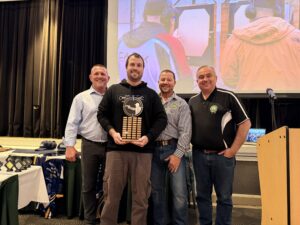
Once the final shots were fired on Sunday afternoon, competitors, officials and SSAA NSW staff headed to Mittagong RSL for the presentation dinner, where an awards ceremony recognised the top shooters from across the weekend in each grade.
The evening also included a light-hearted activity called “Out of Ammo – Full of Answers”. A glass vase was filled with spent brass cartridge cases left over after shooting, and everyone at the dinner had a guess at how many were inside. The closest guess won the door prize, a handheld thermal monocular donated by SSAA NSW and presented by President Jai Rowell.
Looking ahead
The weekend may be over, but for Practical Shooting in NSW it feels like just the beginning. Newcomers and seasoned competitors alike left the SSAA NSW Hill Top Shooting Complex keen for more, and the focus now turns to building on that enthusiasm at club level, so even more members can discover what this dynamic discipline has to offer. If you’re based in NSW and would like to give Practical Shooting a go, Scott Allman would be glad to help you get started.
Special thanks go to Paul Fitzgerald and the Western Australian team, whose experience, hard work and generosity were central to the event’s success. A heartfelt thank you also to the range officers and volunteers from South Australia, the Northern Territory and across New South Wales, the SSAA NSW Team, and every competitor who took part.
And the best part? The National Championships are coming back to NSW in 2027. See you on the range.


