
Practical Shooting (Handgun)
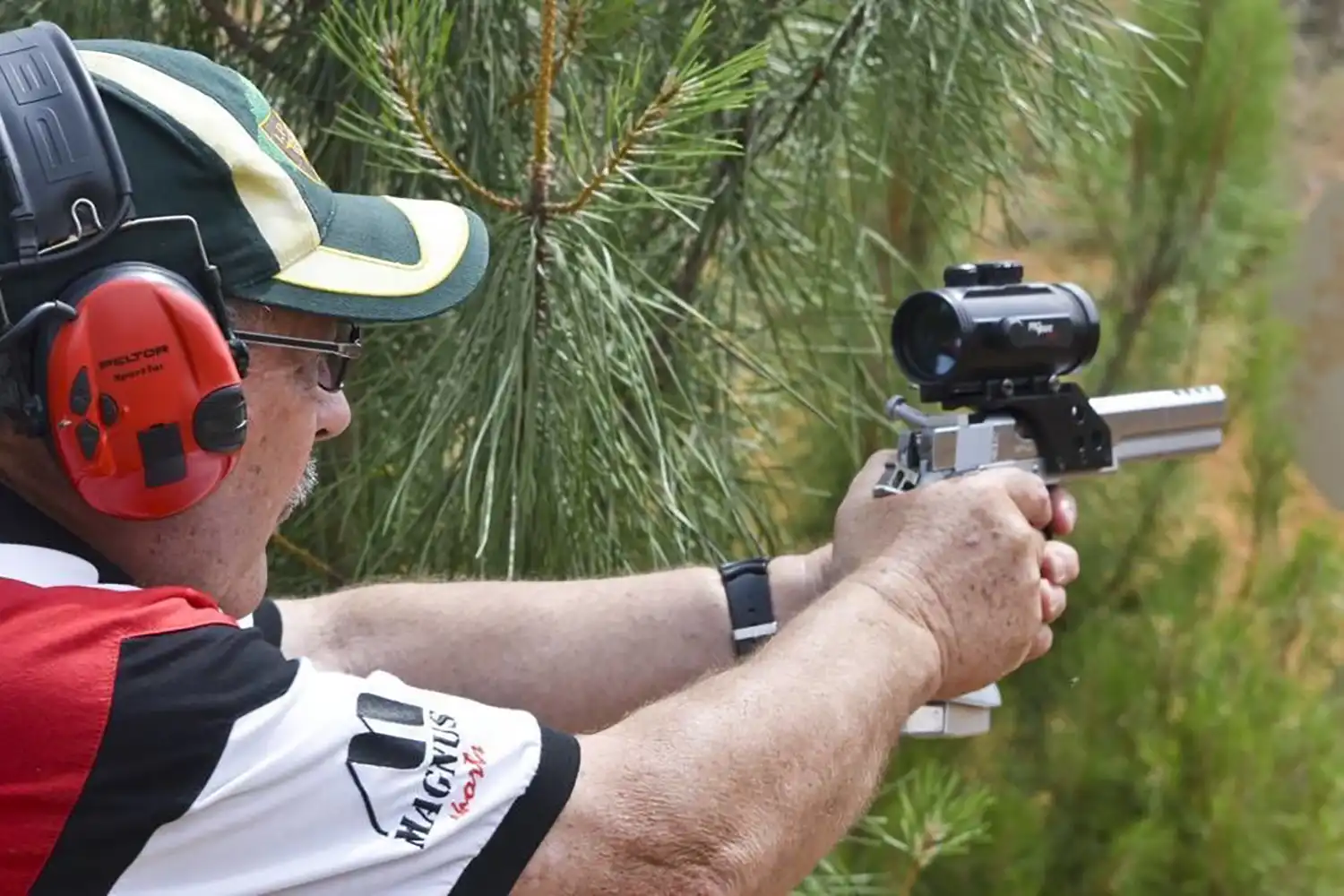
Practical Pistol Shooting is a dynamic and engaging shooting discipline that combines accuracy, movement, and time management.
Shooters complete a series of structured stages designed to test skill, consistency, and safe firearm handling under controlled conditions.
Competitors move through each stage following a clearly defined course of fire, engaging paper and steel targets in a set sequence. Scores are based on both accuracy and time, rewarding shooters who can balance precision with efficient movement.
Practical Pistol Shooting is suitable for shooters who enjoy an active discipline that develops technical shooting skills while operating within strict safety and range procedures.
Practical Shooting has grown steadily across Australia over the past few decades and is now recognised nationally within the SSAA. Originally developed to provide challenging and varied competition formats, the discipline has evolved into a structured sport that prioritises safety, fairness, and skill development.
Within SSAA NSW, Practical Pistol Shooting is conducted under nationally approved rules, with matches designed to accommodate a wide range of experience levels, from newer competitors through to highly experienced shooters.
Most Practical Pistol matches consist of three or more stages, each offering a different challenge. No two stages are the same, ensuring competitions remain engaging and avoid repetition.
Courses of fire may be:
- Published – full details provided in advance
- Semi-surprise – limited information available before shooting
- Surprise – minimal details provided prior to commencement
Each stage is carefully designed to test:
- Accuracy
- Safe firearm handling
- Movement and positioning
- Decision-making under time pressure
Competitors are scored on their performance for each stage, and results are compared against the top score of the day. Shooters are graded over time to ensure fair competition within appropriate skill levels.
Practical Pistol Shooting uses a variety of approved targets, including:
- Paper or cardboard targets
- Steel plates that fall, swing, or react when struck
All targets and stage layouts are set up in accordance with SSAA safety rules and range requirements.
Practical Pistol Shooting within SSAA NSW is conducted using handguns only, including self-loading pistols and revolvers. Firearms must comply with SSAA rules and relevant NSW legislation.
Handgun Divisions
There are four recognised handgun divisions:
- Open Division – Highly modified competition pistols, often featuring optical sights, compensators, and enhanced controls.
- Standard Division – More traditional firearms with limited modifications allowed within defined measurements and rules.
- Production Division – Factory-style handguns with minimal modifications. These firearms are typically used close to their original manufacturer configuration, placing emphasis on shooter skill rather than equipment.
- Revolver Division – Revolvers only. This division is widely respected for its technical difficulty and demands a high level of skill and consistency.
Handgun shooting is conducted at distances of up to 50 metres, with scoring categories applied based on recognised power factors.
All Practical Pistol Shooting activities are governed by:
- SSAA Practical Shooting Rules
- Range-specific safety procedures
- NSW firearms legislation
Strict safety standards apply at all times, including supervision by qualified range officials.
Practical Pistol Shooting is open to appropriately licensed shooters and is conducted through SSAA NSW–approved ranges and clubs. New participants are encouraged to attend matches as observers or speak with their local SSAA NSW branch to learn more about requirements, safety expectations, and match formats.
Find out more
To learn more about getting involved in NSW, contact Scott Allman, SSAA NSW Practical Shooting (Handgun) Discipline Chair.
Email: ScottA@nsw.ssaa.org.au